How Much Does a Container House Really Cost?
Search “container house cost” and you’ll get answers ranging from $80 to $400+ per square foot — sometimes on the same page. That’s not because anyone is lying to you; it’s because a container house isn’t one product. A bare steel shell for a construction site office and a fully finished, furnished residential unit are both “container houses,” and they can differ in price by five times or more. Instead of chasing a single number, it’s more useful to understand the handful of factors that actually move container house cost, so you can tell whether a quote is reasonable for what you’re actually asking for.
Why There’s No Single Container House Cost
Most of the wildly different numbers you’ll find online aren’t wrong — they’re just answering different questions. A US retail price for a finished container home (including land prep, permits, and a builder’s markup) and a factory-direct FOB price from a Chinese manufacturer for a bare or semi-finished unit are two completely different calculations, even for a structurally similar unit. As a rough industry reference point, factory-direct container houses from Chinese manufacturers commonly fall somewhere in the USD 450–900 per square meter range, depending on finish level — but that range only means something once you know which factors are pushing your specific project toward the low end or the high end.
The Factors That Actually Drive Container House Cost
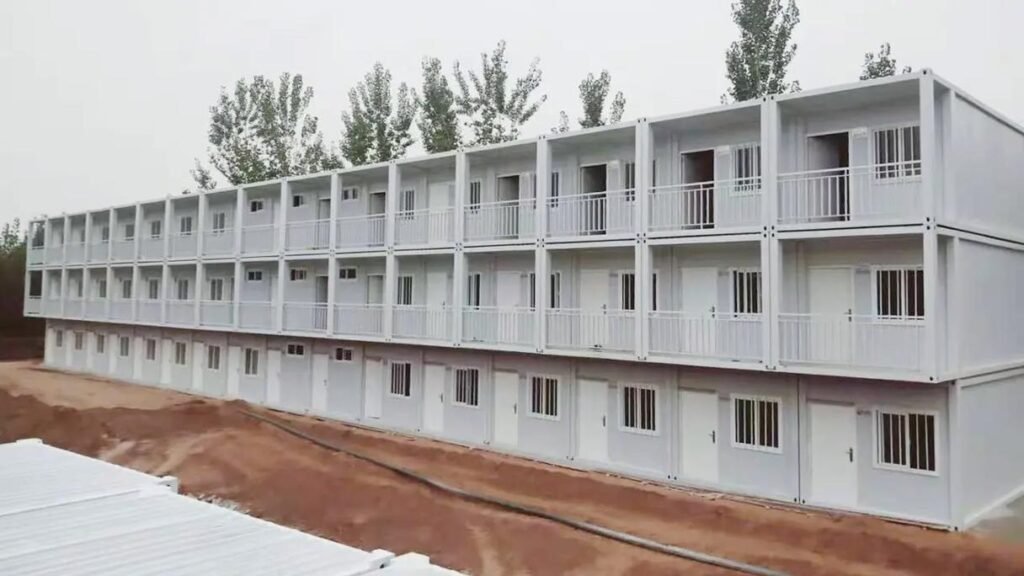
Structure type. A bolt-together assemble container house is generally the most cost-efficient configuration because it minimizes on-site labor and welding. A corrugated panel container house adds cost for the reinforced exterior skin, and expandable or folding units carry a premium for the extra engineering that lets them unfold or compress.
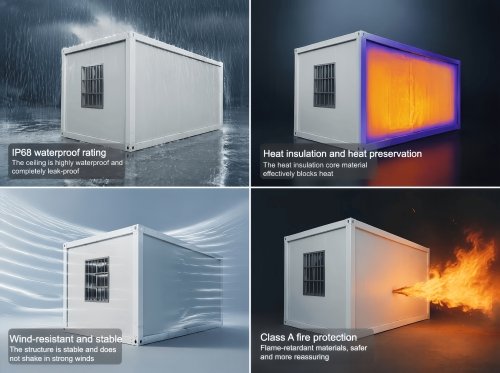
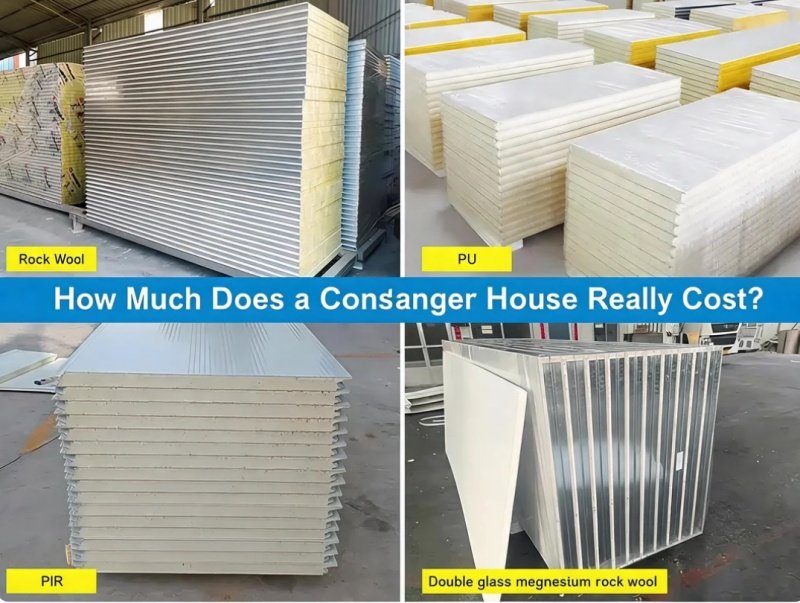
Wall panel material and thickness. As covered in our container house insulation guide, rock wool, EPS, PU, and glass wool panels all sit at different price points, and thicker panels for extreme climates cost more upfront — usually paying for themselves later in lower heating or cooling costs.
Steel frame spec. Heavier-gauge, hot-dip galvanized steel costs more than a lighter or uncoated frame, but as we cover in our container house lifespan guide, it’s also the single biggest factor in how many years the structure lasts — which changes the real cost-per-year even when the upfront price is higher.
Finish level. A bare shell with basic electrical rough-in costs far less than a unit with a fitted bathroom, kitchen cabinetry, flooring, and interior finishing. Most quoting confusion online comes from comparing a bare-shell price on one site to a turnkey price on another.
Size and unit count. Cost per square meter typically drops as unit size or order volume increases, since fixed costs like doors, windows, and electrical panels don’t scale linearly with floor area.
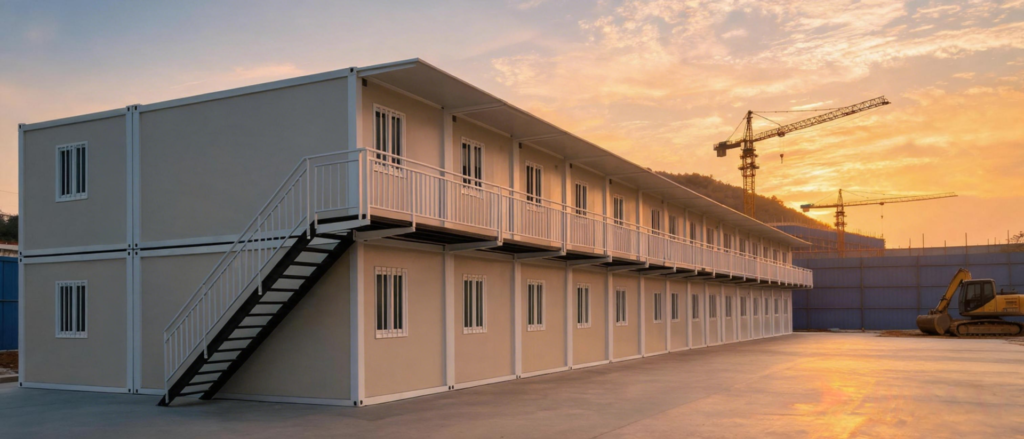
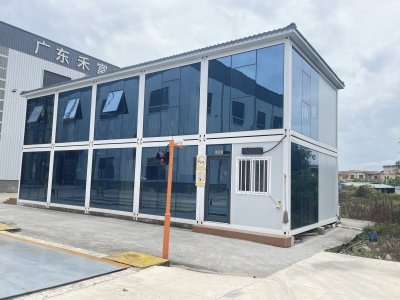
Customization. Standard sizes and layouts keep pricing predictable. Custom floor plans, non-standard window placement, or unusual finishes (like the full-height glass fronts in our temporary office case study) add engineering and production time on top of the base unit cost.
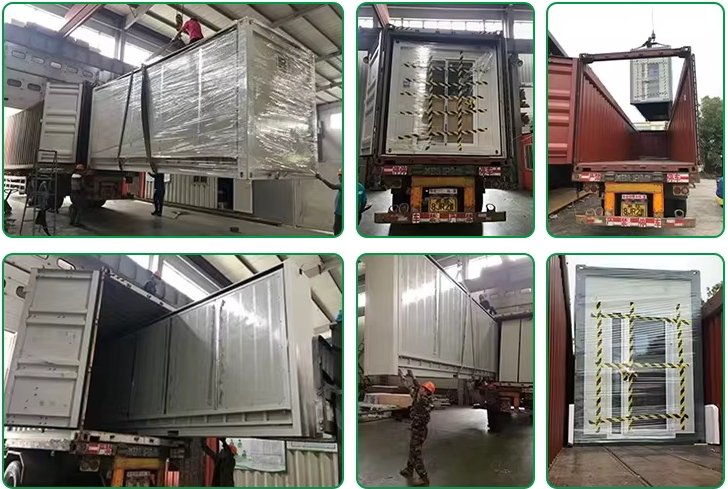
Shipping, duties, and logistics. The factory price is rarely the full landed cost. Ocean freight, destination port handling, inland trucking, and import duty can add a significant amount on top — and as we cover in our import tariff guide, the duty portion alone can range from 0% to double digits depending on your country’s trade agreement with China. Two buyers paying the exact same factory price can end up with very different total costs once logistics and duty are factored in.
How to Get a Number You Can Actually Trust
Because so many variables affect container house cost, the fastest way to a reliable number isn’t more searching — it’s giving a supplier enough detail to quote accurately. Before requesting a quote, it helps to have:
- Approximate size and number of units needed
- Intended use (worker housing, site office, storage, residential) and expected duration of use
- Destination country and site climate
- Rough finish level — bare shell, semi-finished, or fully furnished
A supplier who asks these questions before quoting is generally giving you a more accurate number than one who fires back a price with none of this information.
Get an Accurate Quote for Your Project
Rather than guessing from a general price range, contact E-TOM with your project’s size, intended use, and destination, and we’ll put together a quote based on your actual specification — including an estimate of shipping and duty so you’re seeing the real landed cost, not just the factory price. You can also browse our full prefab container house range to get a sense of the configurations available before you reach out.