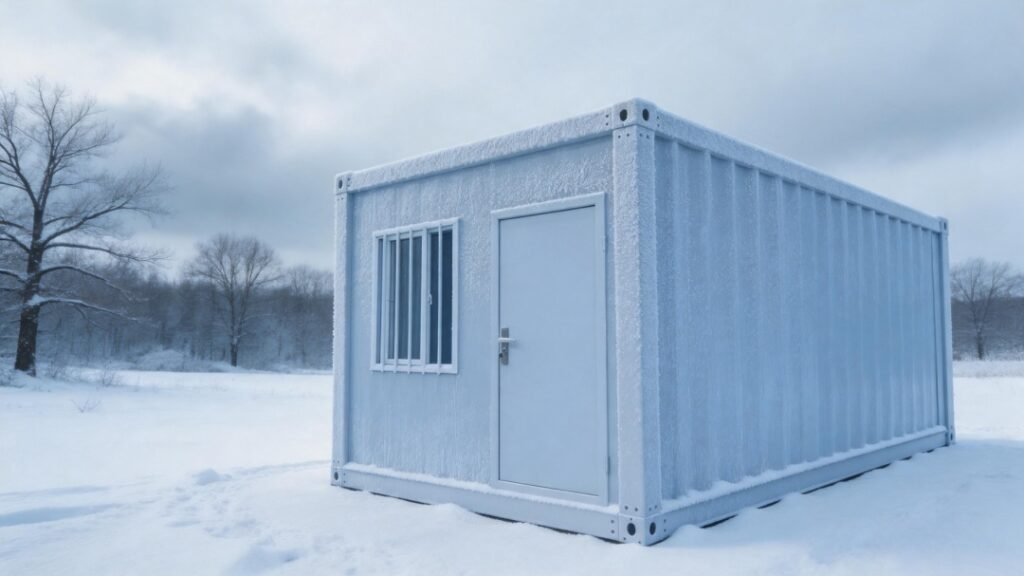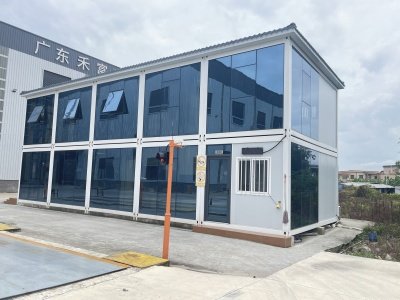
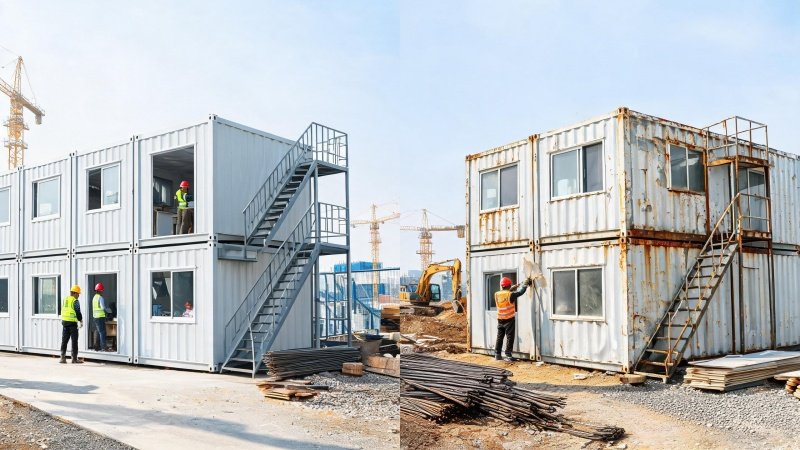
New vs Used Container House: Which Is Actually Worth Buying?
At some point in almost every project, someone asks: “Why not just buy a used container house and save money?” It’s a fair question. A second-hand shipping container looks cheap, it’s available in many countries, and it’s already steel. But a used container house starts life as a box built to carry cargo across oceans, not to be lived or worked in. This new vs used container house comparison looks at both routes honestly, so you can decide whether a converted used container house or a purpose-built new prefab unit fits your project.
What Is a Used Container House?
A used container house starts as a second-hand shipping container that has to be inspected, cleaned, cut, reinforced, insulated, wired, and finished before anyone can use it.
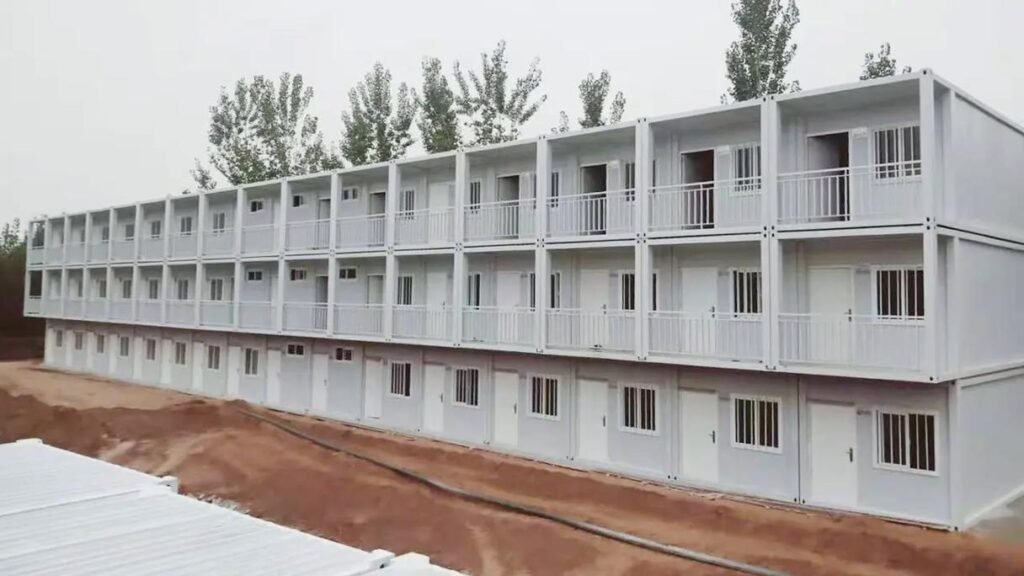
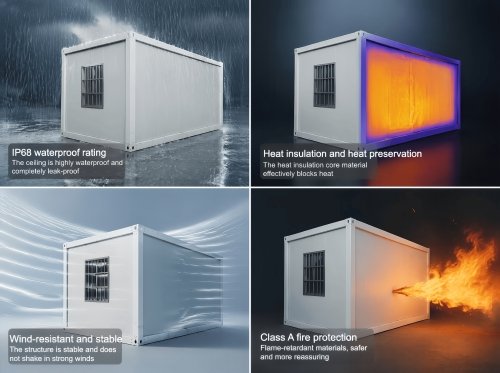
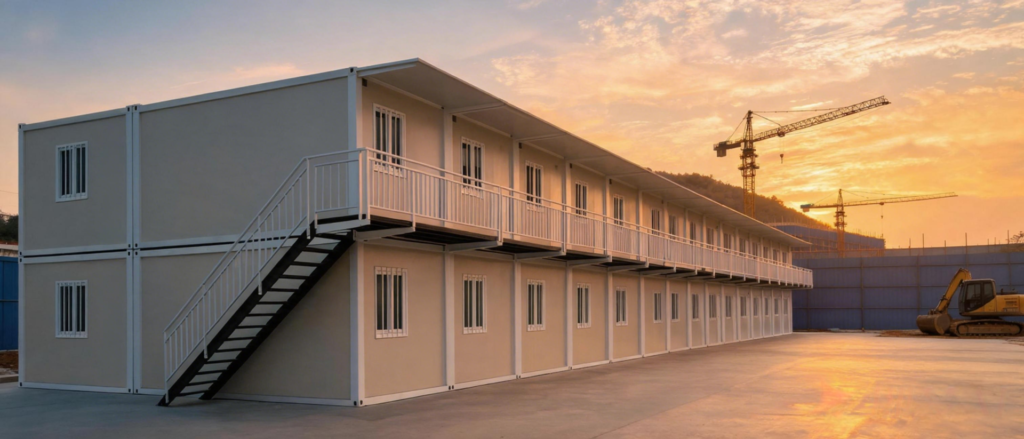
A new prefab container house — like our detachable, flat pack, or foldable types — is designed from the start as a building: steel frame, insulated wall and roof panels, doors, windows, and electrical rough-in all planned and fitted at the factory.
New vs Used Container House: Quick Comparison
Here is how the new vs used container house options line up on the points buyers ask about most:
| Used Container House (Converted) | New Prefab Container House | |
|---|---|---|
| Condition | Varies — rust, dents, twisted frames possible | Consistent, factory-built to spec |
| Insulation | Added manually after purchase | Built in (EPS, rock wool, PU, or PIR panels) |
| Floor safety | May need replacing or treating | Purpose-built floor |
| Openings (doors/windows) | Cut into steel, needs reinforcement | Designed into the frame |
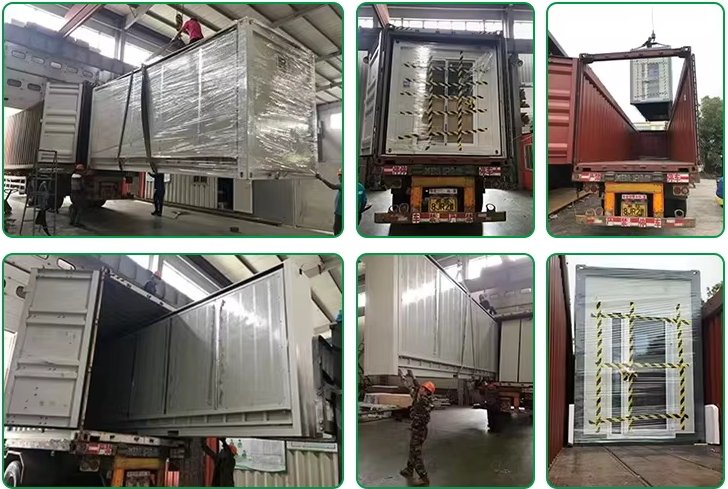
| Shipping | One converted container = one full container footprint | Detachable: 16 per 40ft; flat pack: 8; foldable: 8–12 |
| Warranty | Depends on the converter | 2-year warranty |
| Service life | Depends heavily on condition and maintenance | 15+ years normal service life |
The Hidden Costs of a Used Container House
Unknown history. A used container house is only as good as the container it started from, and that condition varies a lot. Dents, rust, and twisted frames affect structural stability, and older units usually need stripping and treating before conversion even starts. A new or one-trip container is straighter and cleaner, but that’s already a step toward the cost of a purpose-built unit.
Floor chemicals. Shipping container floors are often treated with chemicals for waterproofing and pest control, and a container may have carried goods you know nothing about. For anything people will live or work in, that usually means cleaning, sandblasting, and sealing, or replacing the floor.
Cutting weakens the structure. A shipping container gets much of its strength from its corrugated steel walls. Cutting openings for doors and windows can weaken it, so professional welding and reinforcement are needed — a skilled-labor cost that’s easy to underestimate.
Insulation is an afterthought. Bare steel gets very hot or very cold, and trapped moisture condenses on the metal, leading to rust and mold if the insulation and vapor barrier aren’t done well. Adding insulation inside also eats into an already narrow interior. In a new prefab unit, insulated sandwich panels are part of the structure from day one — see our wall panel materials guide and insulation guide.
Shipping is inefficient. A converted container is the shipping unit itself, so you pay to move the full volume. Our detachable houses fit 16 units in one 40ft container, and flat pack and foldable types fit 8 to 12, which changes the freight math a lot — see our cheapest prefab container house comparison.
When a Used Container House Still Makes Sense
A used container house isn’t the wrong choice everywhere. It can be a sensible option for:
- Basic storage or tool sheds where comfort doesn’t matter
- Short-term, low-spec site use in a market where second-hand containers are cheap and local welders are easy to find
- DIY or one-off projects where you control the conversion quality yourself
In a new vs used container house decision, the further a project moves toward housing people — offices, dormitories, canteens, long-term accommodation — the more a purpose-built unit tends to beat a used container house on comfort, safety, and total cost.
When a New Prefab Container House Is the Better Choice
For most multi-unit or occupied projects, the new vs used container house math favors a purpose-built unit:
- Multiple units. Factory production keeps quality consistent from the first unit to the fiftieth, and flat-packed shipping lowers freight per unit.
- People will live or work inside. Built-in insulation, a clean floor, and planned openings make a real difference to comfort and safety.
- You want a warranty and a service life you can plan around. Ours is a 2-year warranty and 15+ years of normal service life, with installation and after-sales teams in Malaysia and Vietnam — see our warranty guide.
- You need customization. Layouts, door and window positions, and finishes can be planned from the start — see our customization guide.
For a closer look at what can go wrong with container buildings of any kind, read common problems with container houses and how to solve them. For general background on how shipping containers are used in building, the shipping container architecture overview on Wikipedia is a useful neutral reference.
New vs Used Container House: Compare Real Numbers for Your Project
The best way to settle the new vs used container house question is to price both options for your actual site. Contact E-TOM with your quantity, destination, and intended use, and we’ll quote a purpose-built option you can compare against any used container house quote. You can also browse our full prefab container house range, or see what drives price in our prefab house cost guide.