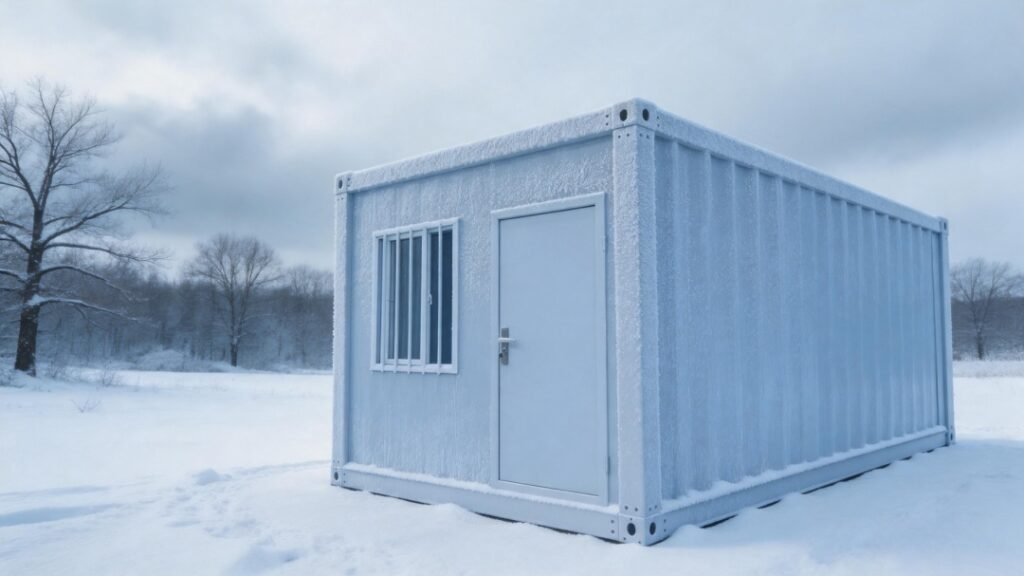
Cheapest Prefab Container House: Detachable vs Flat Pack vs Foldable
Ask three suppliers which prefab container house is cheapest and you’ll probably get three different answers — each one pointing at the product they sell most of. The honest answer is that the cheapest quote and the cheapest total cost are often two different things. A container house that ships cheaply may cost more to install, and one that installs in hours may cost more to ship. This guide compares our three main container house types side by side so you can see where the money actually goes.
The Cost Trade-Off in One Sentence
Every container house type moves cost between two places: freight (how many units fit in a shipping container) and installation labor (how much work is left to do on your site). Pick the wrong balance for your market and the “cheap” option stops being cheap.
Quick Comparison
| Detachable | Flat Pack | Foldable | |
|---|---|---|---|
| Units per 40ft container | 16 | 8 | 8–12 |
| Freight cost per unit | Lowest | Highest of the three | Middle |
| Installation labor | Most — needs installers | Fewer installers | Easiest and fastest |
| Size options | 6*3*2.8M(Customizable) | Fixed: 5.9 × 2.5 × 2.5 m | Fixed: 5.9 × 2.5 × 2.5 m |
| Best for | Large orders, low-labor-cost markets, custom sizes | Standard-size projects needing a rigid, stackable structure | Fast deployment, small crews, urgent timelines |
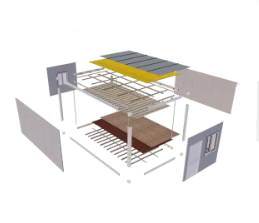
Detachable Container House: Lowest Freight, Highest Labor
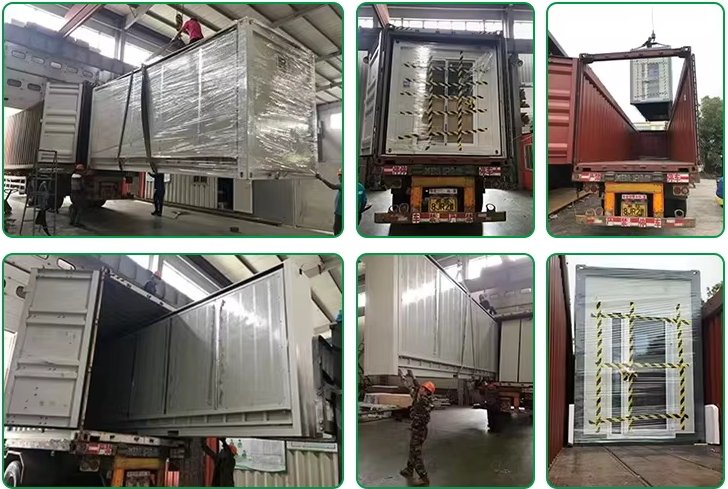
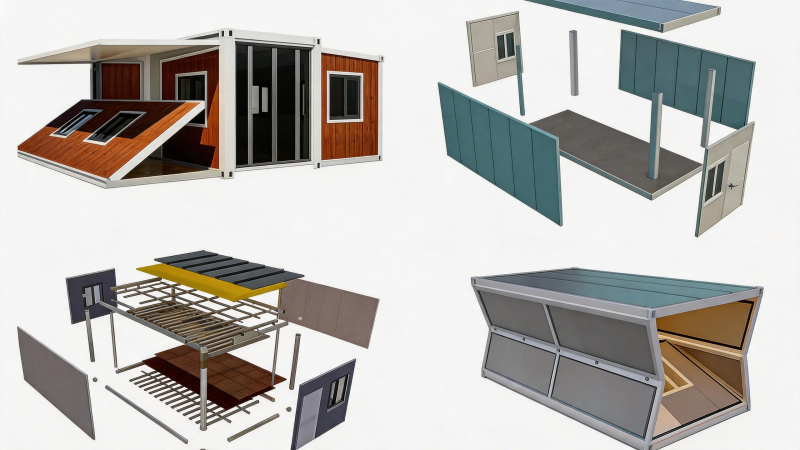
A detachable container house ships as separate frame and panel components rather than assembled units, which is how a single 40ft container can carry 16 sets — double the flat pack figure. Fewer containers per project means a lower freight bill per unit, and because the structure is built up on site, the size can be customized to fit your layout rather than a fixed module.
The trade-off is installation. Every unit has to be bolted together locally, so the project needs a crew of installers and a longer on-site schedule. Whether detachable ends up cheapest depends almost entirely on what local labor costs in your market: where skilled installers are affordable and the order is large, the freight savings usually win; where labor is expensive or hard to find, they can be eaten up quickly. Because the frame is bolted rather than welded, sealing and assembly quality on site also matter more — see our lifespan guide for what to check.
Pros: lowest shipping cost per unit, customizable size, easy to dismantle and relocate. Cons: needs local installation crew, longer on-site build time, results depend on installer skill.
Flat Pack Container House: Fewer Installers, Higher Freight
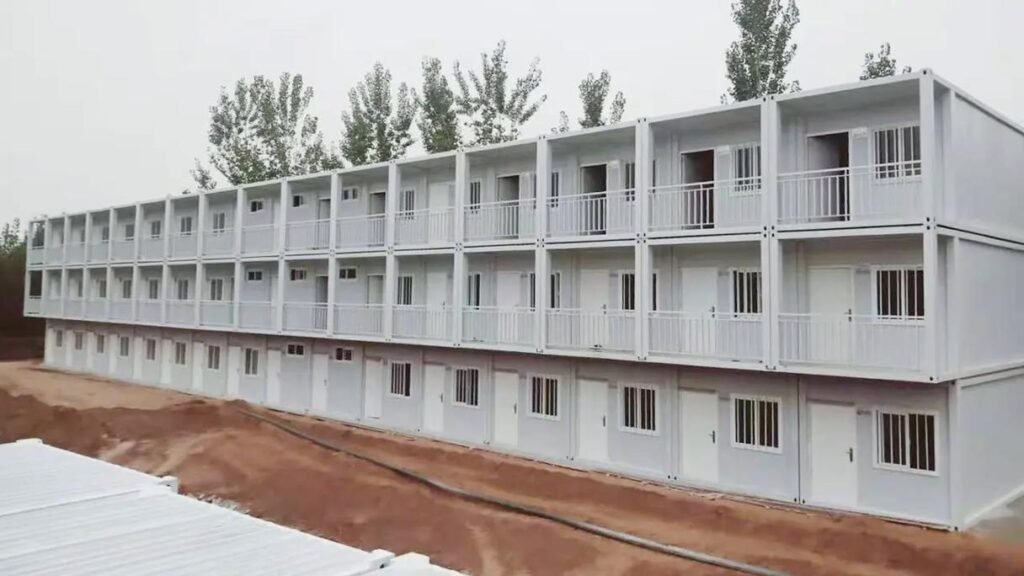
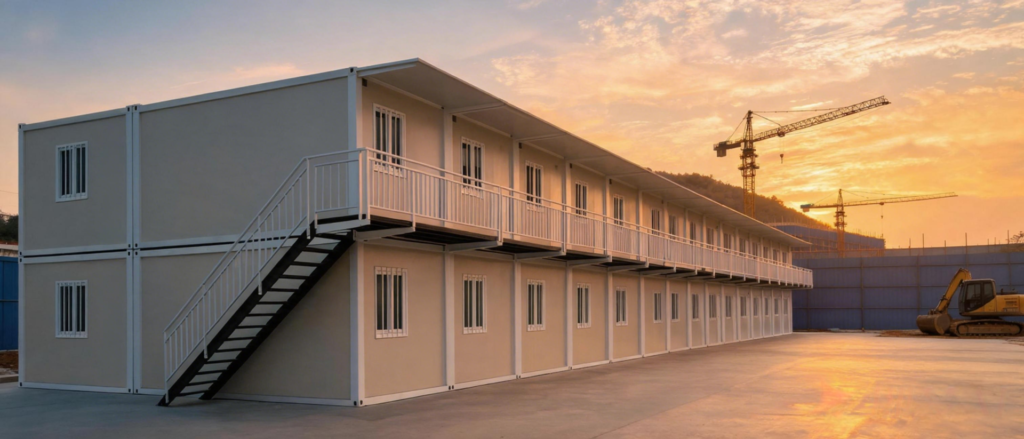
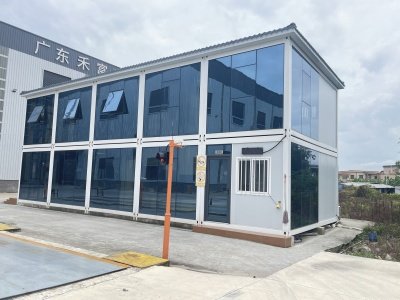
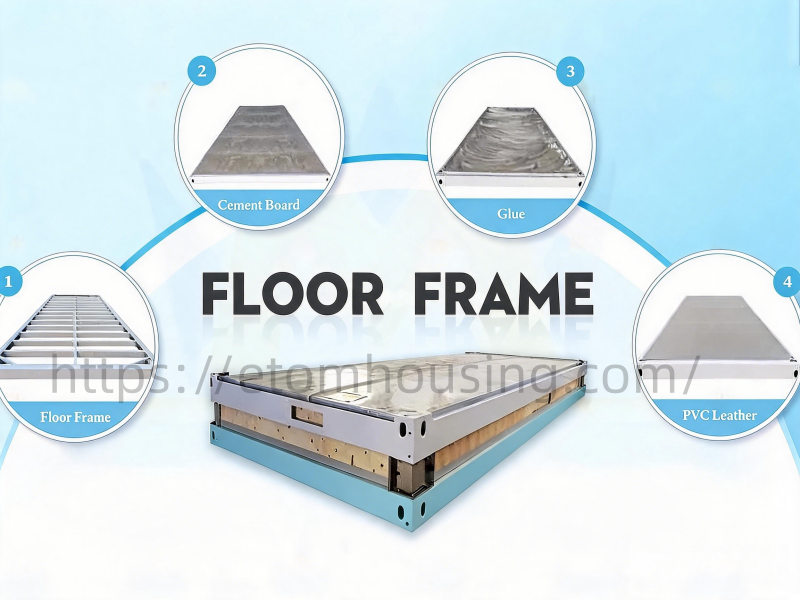
A flat pack container house arrives with more of the structure pre-built at the factory, so on-site work is shorter and needs fewer people. The cost is space: 8 sets per 40ft container, so freight per unit runs higher than detachable. It’s also a fixed-size module (5.9 × 2.5 × 2.5 m), so you’re choosing from a standard footprint rather than a custom one — though multiple units can be joined side by side for larger rooms like canteens or meeting rooms, and the rigid frame can be stacked up to 3 levels.
It tends to suit projects where installation labor is the larger worry — remote sites, markets with expensive skilled labor, or schedules where every day on site costs money.
Pros: fewer installers needed, rigid and stackable (up to 3 levels), predictable assembly. Cons: higher freight per unit, fixed size, usually needs a crane or forklift to place units.
Foldable Container House: Fastest to Set Up
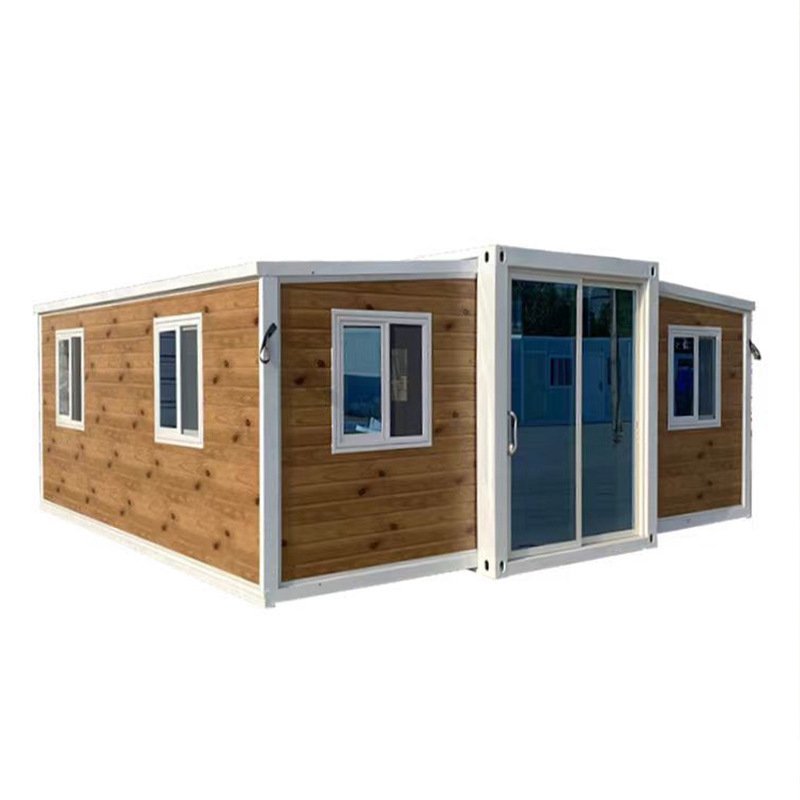
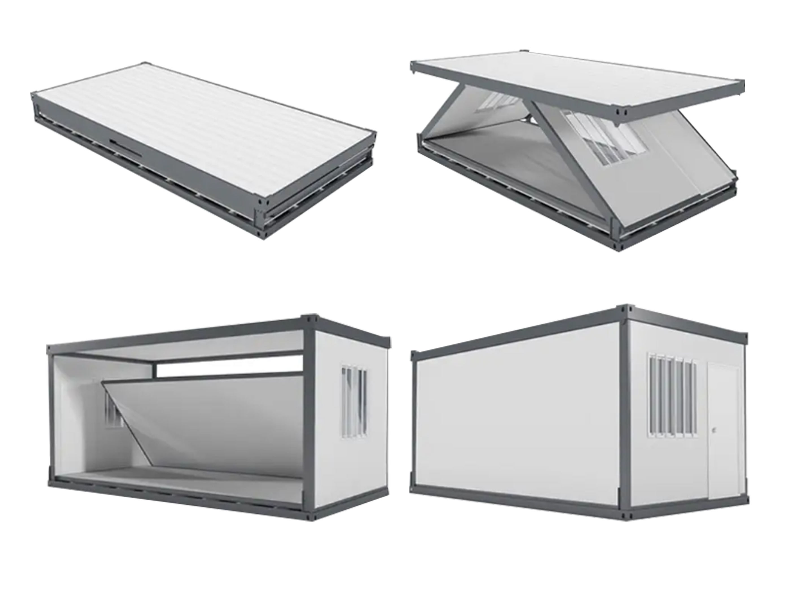
A foldable container house folds down for transport and opens up on arrival, so installation is the easiest of the three — there’s very little to assemble. 8 to 12 sets fit in a 40ft container, putting its freight cost between the other two. Size is fixed at 5.9 × 2.5 × 2.5 m.
The appeal is speed and simplicity: small crews, short timelines, and temporary or semi-permanent use like site offices, camps, and relief accommodation. What you give up is flexibility — you can’t change the footprint — and because the unit relies on folding joints, hinge and seal condition is worth checking if it will be folded and redeployed many times.
Pros: quickest and simplest installation, good freight density, easy to redeploy. Cons: fixed size, moving parts and seals need care over repeated cycles, less room for custom layouts.
So Which One Is Actually Cheapest?
It depends on your project, but a simple rule of thumb holds up well:
- Large order, affordable local labor, or you need a custom size → Detachable. Freight savings add up fast across many units.
- Standard size is fine and you want fewer installers or stacking → Flat Pack. You pay more to ship, less to install.
- Speed and ease matter most, or you have a small crew → Foldable. Lowest setup effort, mid-range freight.
Remember that freight isn’t the only cost either — import duty can range from 0% to double digits depending on where you’re shipping, as covered in our import tariff guide, and ocean rates move with the market (publicly tracked by indices like the Freightos Baltic Index). Local installer wages vary just as much; the ILO’s wage statistics are a useful starting point for comparing markets.
Before You Compare Quotes
Make sure every quote you’re comparing includes the same wall panel material and thickness (see our materials guide), the same finish level, and — critically — whether installation is included or left to you. A low unit price that excludes installation isn’t comparable to one that includes it. For a broader breakdown of what drives price, see our prefab house cost guide, and for production and shipping schedules, our delivery time guide.
Get a Real Number for Your Project
The fastest way to find your cheapest option is to run the numbers for your actual destination, order size, and local labor situation. Contact E-TOM with your quantity, site location, and whether you have local installers, and we’ll compare detachable, flat pack, and foldable for your project — including freight and installation — so you can see the full picture, not just the unit price. You can also browse our full prefab container house range.