Container House Wind Resistance: Can It Handle Typhoons, Earthquakes, and Extreme Heat?
For buyers in the Middle East, Southeast Asia, and other regions with real climate extremes, “will it survive the weather here” often matters more than price or looks. The good news is that container house wind resistance and earthquake performance aren’t a matter of luck — they come from specific, verifiable engineering choices: steel grade, foundation design, panel reinforcement, and how the unit is anchored to the ground. Understanding these factors lets you ask the right questions instead of just trusting a manufacturer’s claim.
Container House Wind Resistance in Typhoon and Hurricane Zones
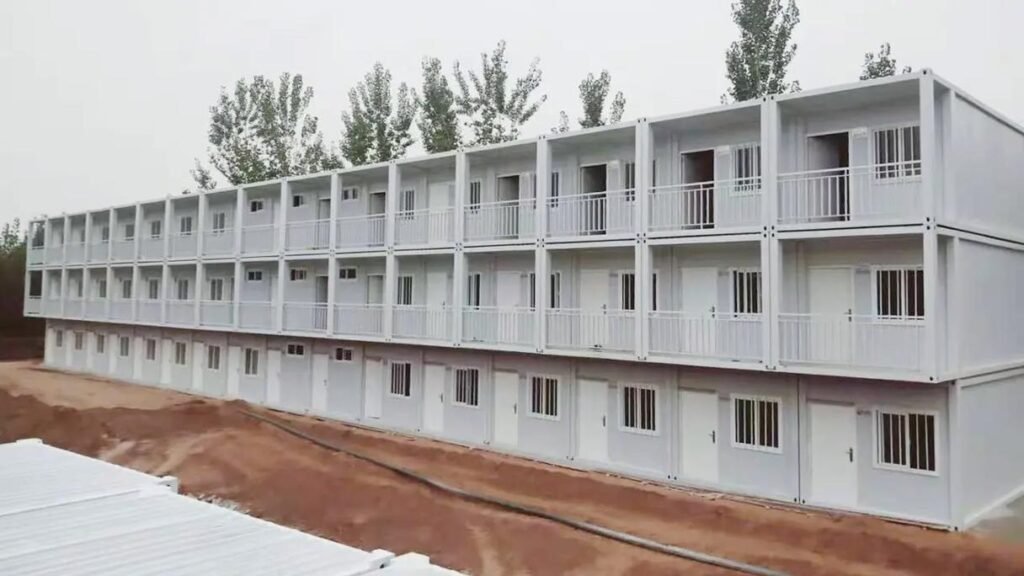
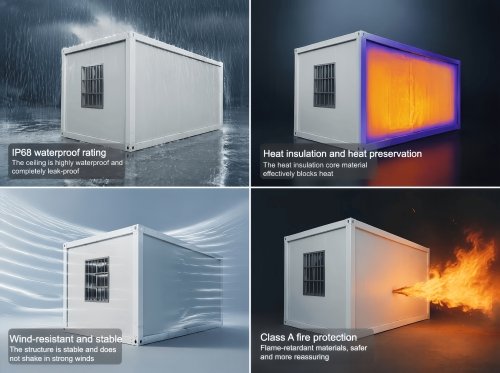
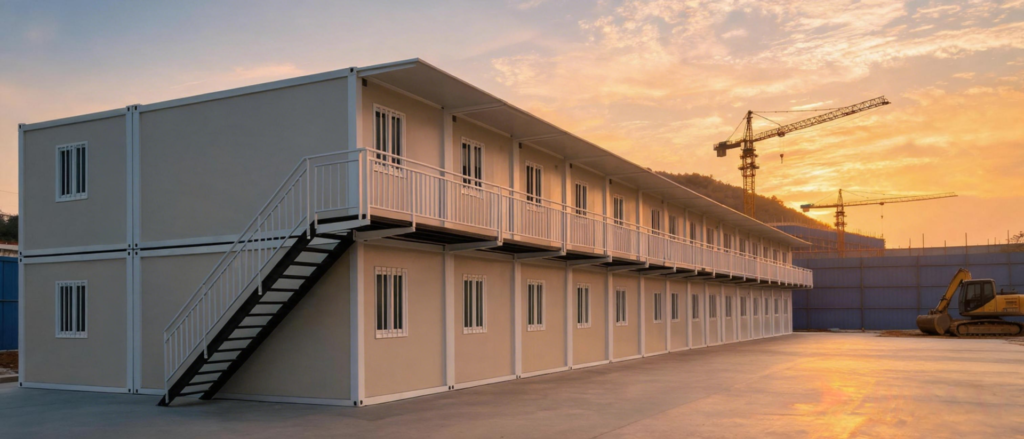
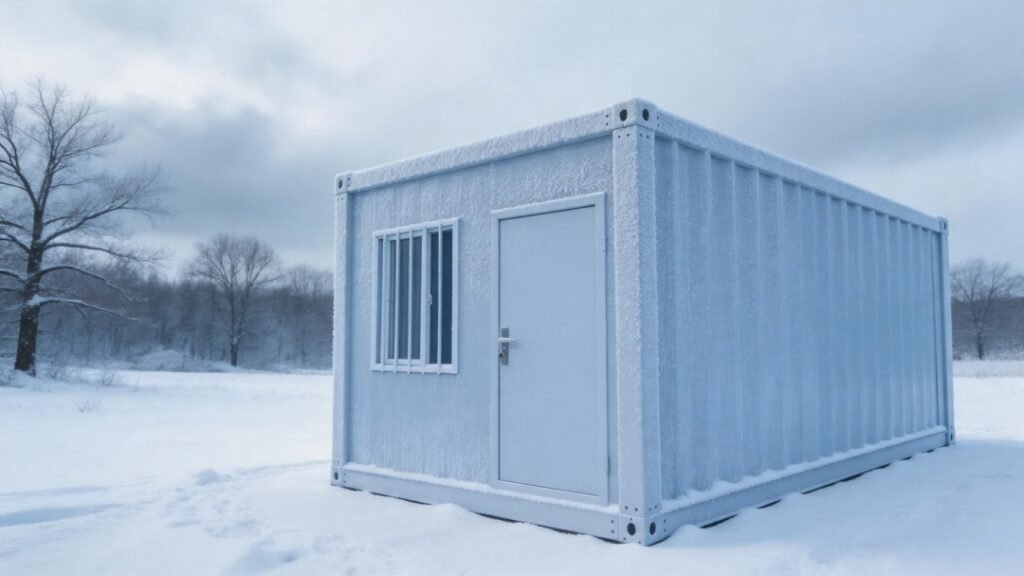
A well-engineered container house handles high wind through a combination of frame strength and foundation anchoring, not the wall panels alone. The steel frame carries the structural load and resists wind pressure, while corner castings and reinforced joints keep the structure from racking or twisting under lateral force. A corrugated panel container house adds extra rigidity from its ribbed exterior skin, which helps resist both wind-driven debris impact and the panel flex that weaker structures experience in sustained high winds.
Foundation and anchoring matter just as much as the unit itself. A container house bolted or welded directly to a concrete slab or pile foundation resists uplift and lateral movement far better than one simply resting on the ground — this is usually the difference between a structure that survives a storm and one that doesn’t. If you’re specifying units for a cyclone- or typhoon-prone region, foundation and anchoring detail should be part of the conversation with your supplier from the start, not an afterthought at installation.
Earthquake Resistance: Why Steel Has a Real Advantage
Seismic performance comes down to a basic material property: steel flexes, while brick and concrete crack. During an earthquake, a rigid masonry structure absorbs stress until it fractures, while a steel-framed container house can flex and distribute seismic energy across the whole frame instead of concentrating it at one failure point. This is part of why container-based and modular steel housing shows up repeatedly in earthquake-prone regions as both temporary and semi-permanent housing — the structural logic that makes steel suitable for skyscrapers in seismic zones applies at a smaller scale here too.
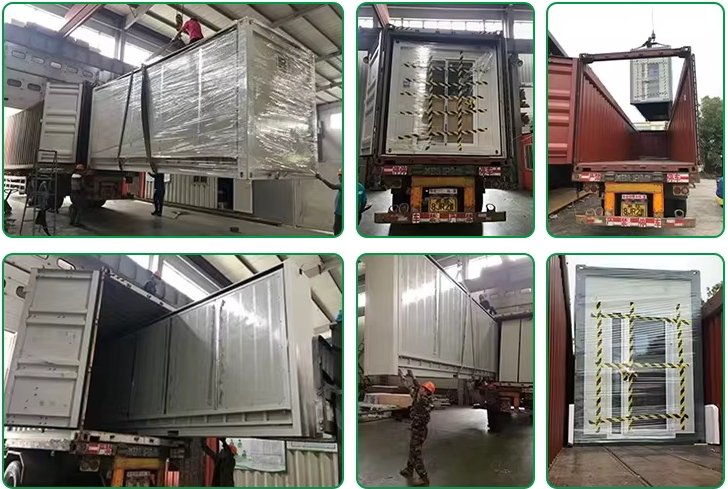
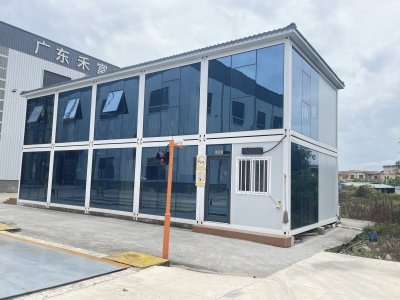
Connection type matters for seismic performance specifically. An assemble container house, built with bolted rather than fully rigid welded joints, has a degree of built-in flexibility at each connection point, which can help absorb movement rather than transferring it as concentrated stress through the frame.
Extreme Heat: A Different Kind of “Survival”
Heat resistance isn’t about the structure collapsing — it’s about whether the space stays livable. In desert and tropical climates, the real risk is a structure that survives the weather but becomes unusable inside without proper insulation, as we cover in detail in our container house insulation guide. Reflective roof coatings, adequate panel thickness, and ventilation planning all matter more in a 45°C desert site than any wind or seismic spec, so climate-appropriate insulation should be treated as part of the structural conversation, not a separate line item.
What to Ask a Supplier About Climate Performance
Marketing claims about wind and earthquake resistance are easy to write and hard to verify. Before you rely on one, it’s worth asking:
- What wind pressure rating (kN/m² or equivalent) has this configuration been engineered to, and against which building code or standard?
- What foundation and anchoring method do you recommend for my site conditions, and is it included in your installation guidance?
- Do you have third-party test reports or project references from a similarly extreme climate?
- How does the connection type (bolted vs. welded) affect performance in my specific risk — wind uplift, seismic flex, or both?
A supplier who can answer these with specifics, rather than a general “yes, it’s earthquake-resistant,” is one you can actually verify — and that verification matters more than the claim itself.
Matching Structure and Foundation to Your Site’s Real Risk
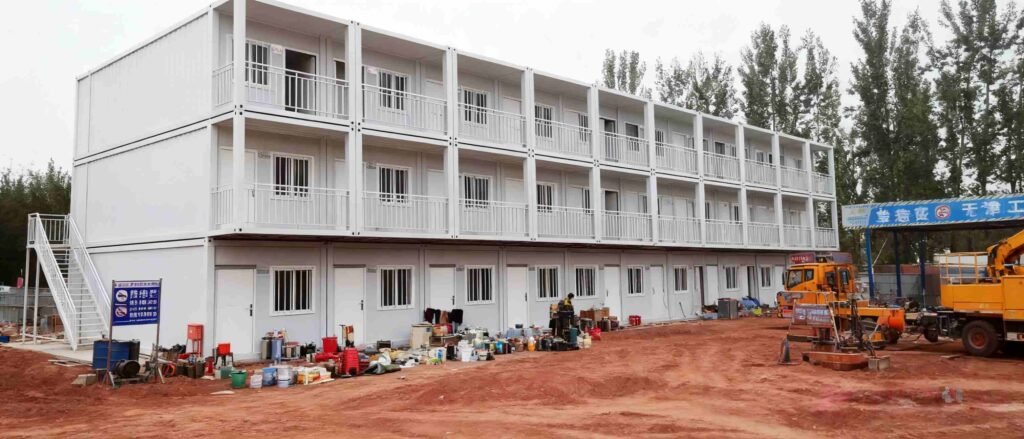
Climate resistance isn’t a single spec — it’s matching frame strength, panel type, and foundation design to the specific risks at your site, whether that’s typhoon winds, seismic activity, or extreme heat. If you’re planning a project in a challenging climate, contact E-TOM with your site location and conditions, and we’ll recommend the structural configuration and foundation approach that actually fits — rather than a generic spec that happens to work most places. You can also compare our full prefab container house range, including the expandable and foldable configurations, to see which base structure fits your project before adding climate-specific reinforcement.